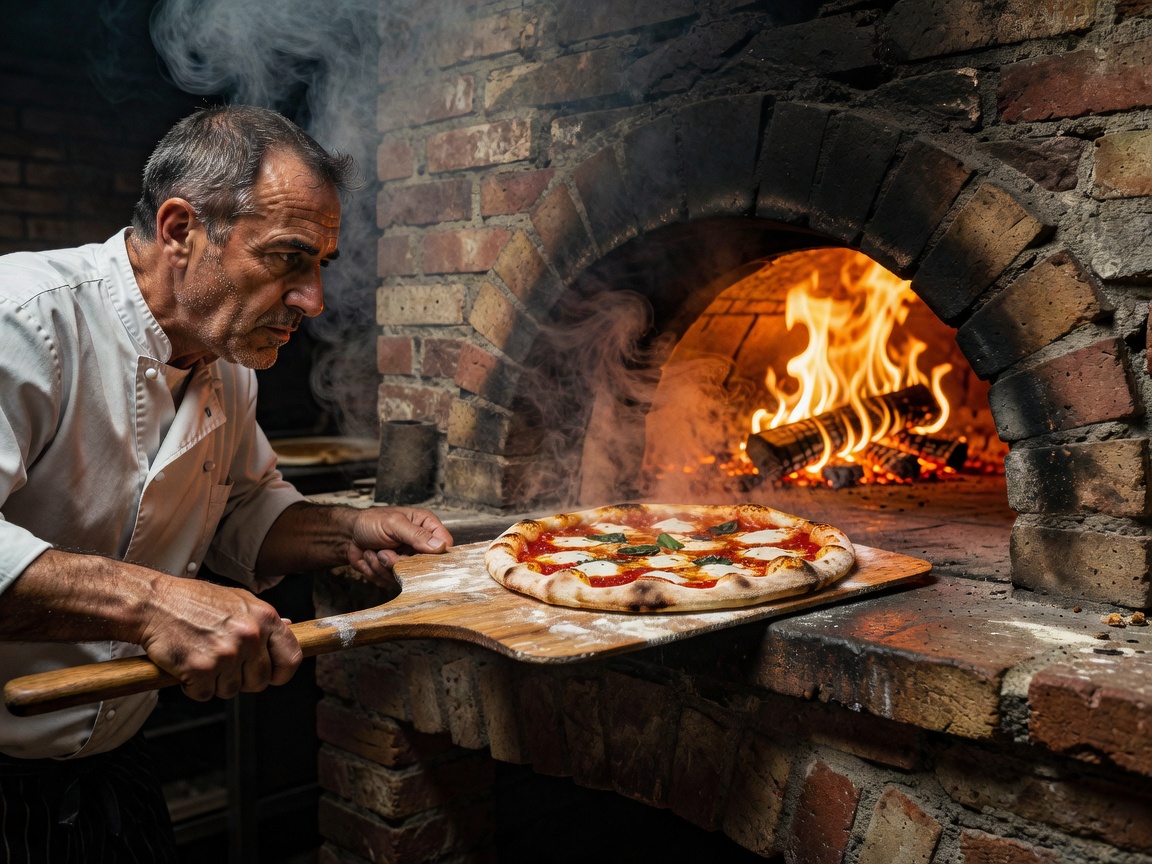
Baking authentic Neapolitan pizza requires dual heat sources: conductive heat from the floor tile and radiant/convective heat from the rolling flame overhead. Achieving harmony between conductive deck temperature (800°F–850°F) and dome air temperature (900°F–950°F) is the hallmark of master wood-fired baking.
Conductive vs. Radiative Balance
If your floor is too hot relative to the ceiling flame, the bottom of the crust will scorch black before the cheese melts and the cornicione develops proper leopard spots. Conversely, if the rolling flame is intense but the floor lacks saturated thermal mass, the top will burn while the bottom remains pale and doughy.
Pro Tip: Deck Heat Recovery Spot Swap
When baking multiple pizzas sequentially, never place the next pizza in the exact same spot on the deck. Cold dough absorbs heat from the cordierite stone, creating a "cool zone." Always launch the next pizza 6 to 8 inches beside the previous spot where thermal saturation remains intact.
Hardwood Selection & Combustion Efficiency
Only dry, seasoned hardwoods with moisture content under 15% should be used. Kiln-dried Oak, Beech, Ash, or Birch generate clean rolling flames without excessive soot or acrid smoke. Avoid softwoods like pine, which contain resinous sap that coats the stone deck and causes toxic taste profiles.